
Predicting Interface Behaviour
Building computational frameworks that make biomolecular interfaces designable
Designing functional protein systems remains a major challenge due to the difficulty of predicting how proteins will behave in complex biological environments. Interactions at biomolecular interfaces are highly sensitive to local structure, physicochemical properties, and environmental context, making rational design inherently difficult. As a result, many approaches to protein modification and formulation remain empirical, limiting efficiency, reproducibility, and translation.
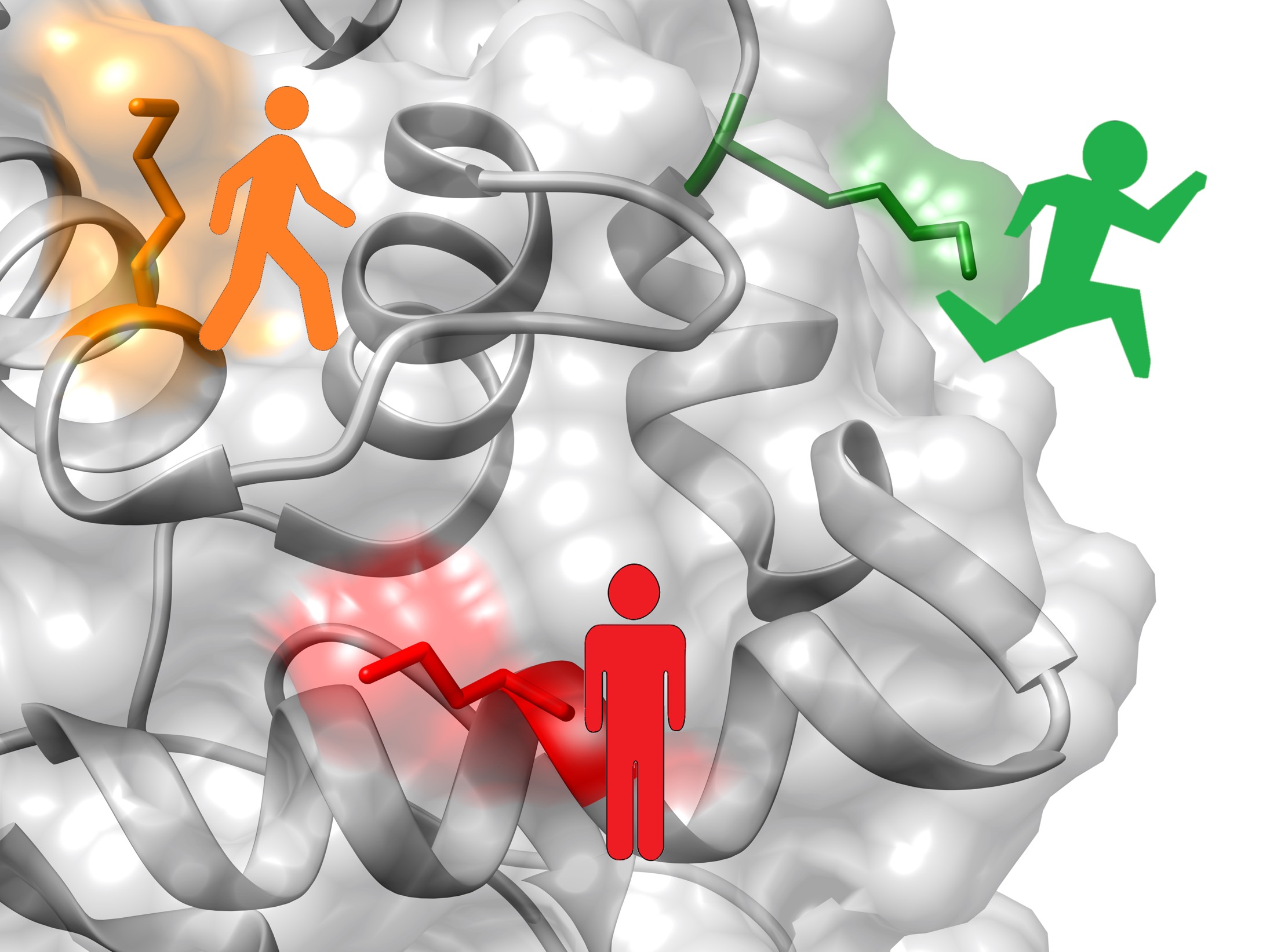
Our work addresses this challenge by developing predictive frameworks that link molecular structure to interfacial behaviour. Building on mechanistic insights into how protein structure governs reactivity and interaction, we integrate physicochemical descriptors, structural information, and experimental data to model and anticipate protein behaviour at interfaces.
This includes the development of PRELYM, an open-source computational platform that enables prediction of modification outcomes and guides the rational design of biomolecular systems. By capturing key features that govern interfacial interactions, PRELYM provides a route to predict how proteins will respond to chemical modification and formulation strategies, reducing reliance on trial-and-error approaches.
Together, this work establishes a predictive framework for biomolecular interface engineering, enabling a shift from empirical optimisation to design-driven control of protein behaviour. This provides a foundation for scalable, reproducible, and efficient development of next-generation protein therapeutics.
Related Publications
-
Automated prediction of site and sequence of protein modification with ATRP initiatorsRead More
A Patel, P Smith, A Russell, S Carmali. PLOS ONE, e0274606 (2022). -
Moving protein PEGylation from an art to a data scienceRead More
L Mao, AJ Russell, S Carmali. Bioconjugate Chemistry, 33(9), 1643–1653 (2022). -
Tertiary structure-based prediction of how ATRP initiators react with proteinsRead More
S Carmali, H Murata, E Amemiya, K Matyjaszewski, AJ Russell. ACS Biomaterials Science & Engineering, 3(9), 2086–2097 (2017).